
How FIFA Plans to Sell Tomorrow's World Cup Today
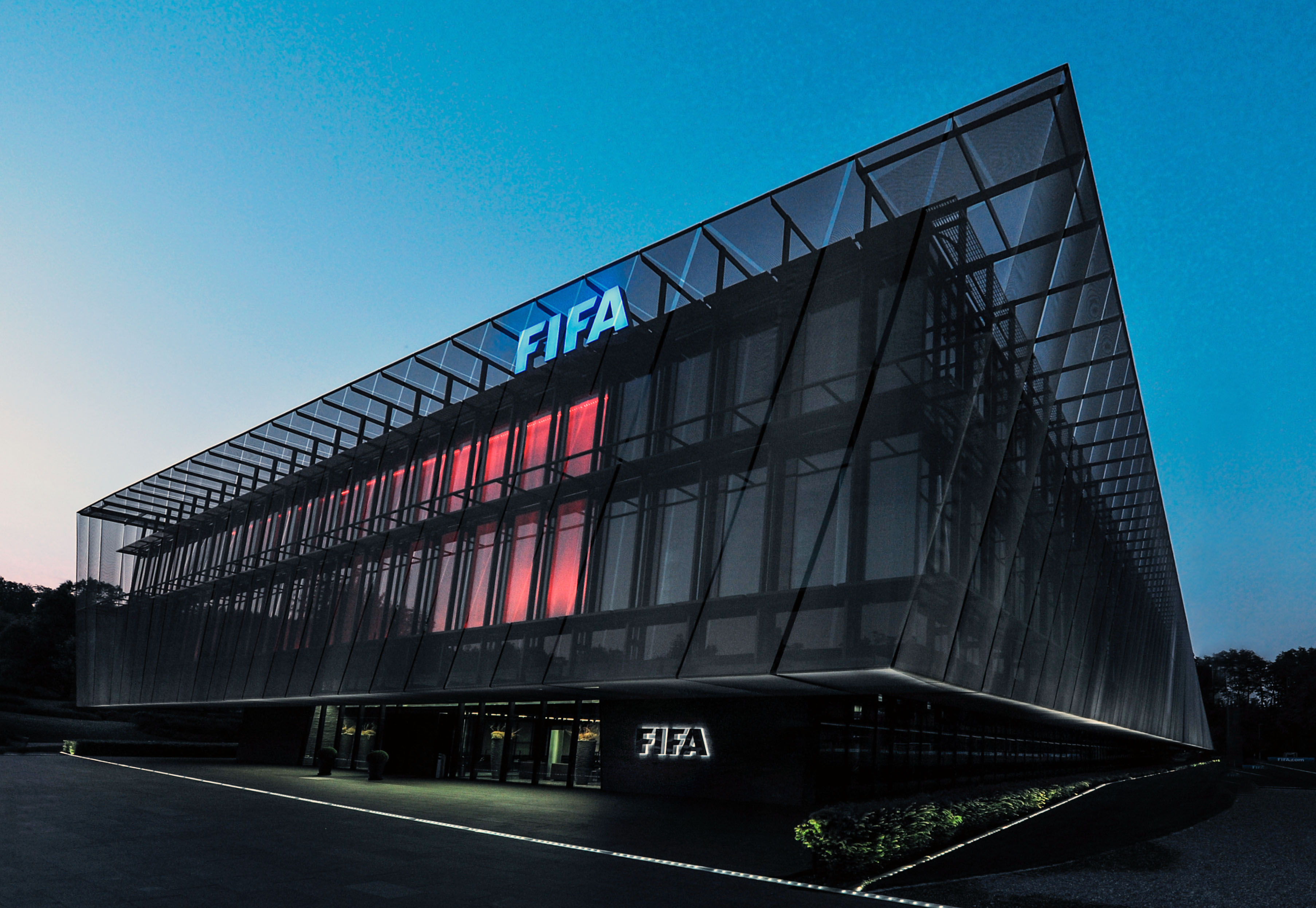
FIFA has designed a transaction in which future World Cups would finance football development today.
FIFA Forward Enterprise, or FFE, would place the governing body's broadcast, sponsorship, ticketing and licensing rights alongside tournament delivery in one commercial company. Outside investors could buy up to 20% at an initial equity valuation of $20bn, providing as much as $4.2bn. FIFA would retain a perpetual majority and promises more than $10bn of development funding over the next four years.
The legal structure is narrower than an outright sale of the World Cup. Investors would purchase equity in a subsidiary rather than FIFA or individual broadcasting contracts. The economic consequence is broader: private capital would gain a durable claim on the value created by FIFA's tournaments. Price, duration, shareholder rights and the use of proceeds will determine whether that trade is attractive. Most of those terms remain unpublished.
What the investors would own
FIFA says it would keep sole control of FFE and exclusive authority over competitions, the international calendar and every regulatory or sporting decision. Investors would hold minority, non-controlling interests and play no operational role. Their asset would still be the commercial cash flow produced by those decisions.
A dedicated company could improve execution. One management team could sell rights across men's, women's and youth tournaments, build better audience data, recruit specialist talent and measure each property through a clearer profit-and-loss account. Commercial subsidiaries already exist elsewhere in football: UEFA and European Football Clubs created UC3 to manage club-competition rights. FFE adds outside shareholders and tournament operations to the model.
That separation can create useful discipline. It can also hide more than it reveals if contracts, transfer prices and segment accounts remain private. A separately incorporated business improves accountability only when its reporting is at least as transparent as the organisation it serves.
$4.2bn in, $4.2bn out
The proposed capital flow is almost perfectly circular. FIFA's new Fast Forward Programme would offer each of its 211 member associations up to $20m for infrastructure, coaching, national teams, grassroots projects and the women's game. Multiplying the two figures produces $4.22bn, almost exactly the maximum equity raise.
In effect, FIFA would exchange a minority share of future commercial value for an immediate distribution to its members. The timing has a financial logic. FIFA reported $2.70bn of reserves at the end of 2025; the new one-off programme would exceed that reserve base. Equity preserves the buffer and avoids fixed interest payments during the quiet years between men's World Cups.
Up-front funding can create lasting value when it finances training centres, pitches or competitions that smaller associations could never fund from one development cycle. Permanent capital carries a permanent price. Future profits and valuation gains are shared with the new owners, and new facilities bring maintenance costs long after the one-off grant has been spent.
The voting design sharpens the trade-off. FIFA's announcement would raise ordinary Forward funding from a budgeted $8m to $20m per association for 2027-30, with another optional $20m available immediately. A letter reported by Reuters gives associations until 19 September to access the one-off payment. Today's voters receive the capital; future administrations live with the dilution. That intergenerational mismatch makes an independent valuation and project-level safeguards essential.
The valuation needs a second growth act
FIFA expects revenue for the 2023-26 cycle to exceed $15bn, almost double the $7.57bn generated in 2019-22. A $20bn valuation therefore equals a little over five times average annual cycle revenue. Reuters Breakingviews places that below the revenue multiples of Formula One and TKO Group. The comparison is indicative: FFE would be private, illiquid, minority-owned and unusually dependent on one event.
Nearly $11bn of the current cycle's expected revenue arrived in 2026, according to Breakingviews. That concentration explains some of the appeal of equity. Investors absorb the timing risk without a scheduled repayment. It also means their return depends heavily on turning a quadrennial windfall into a business that compounds.
At a 15% annual return, a $4.2bn investment would need to be worth about $7.3bn by 2030. With no cash distributions, the whole company would need a valuation near $37bn, an 85% increase in four years. Dividends would reduce that valuation hurdle by sending cash to investors that could otherwise remain within football. FIFA says all net benefits will be reinvested in the game, while the proposed return mechanism has yet to be disclosed.
Some growth can come from better sales, digital distribution and stronger women's and youth properties. Faster levers sit inside the product: more matches, more competitions, higher ticket yields, longer rights agreements and more commercial inventory. The transaction therefore places a financial value on choices that also affect player workload, supporter access and the scarcity of the World Cup.
The calendar sits inside the valuation
Formal control over football and economic influence over football cannot be fully separated. Tournament frequency, format, host selection and the international calendar all determine FFE's revenue. FIFA would make those decisions while also owning at least 80% of the company whose value they affect.
Minority status leaves many possibilities. Shareholder agreements often grant board representation, information rights, protections over major transactions and conditions on future share transfers. Those provisions can protect capital without directing the sport, but FFE's agreement, dividend policy, exit mechanism, fee structure and conflict rules have not been published. The phrase "non-controlling" settles little by itself.
The proposed lead investor adds political sensitivity. Thrive Eternal was founded by Joshua Kushner, whose brother Jared is US President Donald Trump's son-in-law. Reuters reported that Jared Kushner is not a prospective investor. Political proximity provides no evidence of impropriety; it raises the standard required for a competitive process, beneficial-ownership disclosure and independent conflict review.
A global vote meets European law
The politics run through FIFA's one-country, one-vote system. FIFA says FFE needs support from a majority of its 211 associations and approval from the FIFA Council. UEFA has 55 members and cannot block the proposal alone. A $20m payment is transformative for many smaller federations, giving the redistribution case genuine force well beyond Europe.
The process has weakened that case. UEFA, the Asian Football Confederation and Concacaf - together representing 143 associations - all criticised the lack of prior consultation. Their statements do not bind each national association, but they show how little institutional consent existed when detailed terms first reached the public. Combining an approval deadline with an immediate payment also makes the electorate a direct beneficiary of the transaction it must assess.
European regulators may provide a second test. The EU's commissioner for sport has warned that the plan could face scrutiny over competition law, governance and conflicts of interest. The Court of Justice's 2023 European Superleague judgment already required FIFA and UEFA to exercise their regulatory powers through transparent, objective, non-discriminatory and proportionate rules. Its relevance to FFE is cautionary: rule-making power and commercial self-interest require clear safeguards.
The missing clauses decide the deal
FFE has a credible financial case. It can mobilise more development capital than FIFA's current reserves, match a lumpy revenue base with patient equity and introduce commercial expertise. The downside is equally concrete: permanent dilution, pressure for rapid growth and a sharper conflict between FIFA's commercial portfolio and its role as football's regulator.
A defensible transaction would need an independent valuation, a competitive investor process, published fees and beneficial owners, audited FFE accounts, independent directors, strict recusal rules, transparent rights tenders and clear limits on dividends, exit rights and sporting influence. Development money should be released against approved projects and long-term operating plans rather than treated as an unrestricted signing bonus.
FIFA's strongest argument is timing: use a record World Cup and a high valuation to invest across the global game. Its weakest is process: members are being asked to monetise a generational asset before the governing documents and investor economics are visible. Until those clauses are published, football knows the cash arriving today and very little about the bill attached to tomorrow.
Research Note | Interpretations and Assumptions TSL interpretation: FFE remains a proposal. FIFA has not published a shareholder agreement, governance charter, investor protections, dividend policy, exit terms, fee schedule or valuation materials. The $4.22bn pass-through is arithmetic; the 15% return and $37bn 2030 valuation are a Reuters Breakingviews scenario, not a FIFA forecast. The regulatory discussion identifies potential scrutiny rather than a finding of illegality. Facts are current to 29 July 2026.
Sources and Methodology
FIFA | FFE proposal and planned development funding
FIFA | Expected 2023-26 cycle revenue above $15bn
FIFA Annual Report 2025 | Balance sheet and reserves
Reuters | Structure, investors and FIFA's control assurances
Reuters | FFE explainer, member funding and September deadline
Reuters Breakingviews | Valuation and investor-return scenario
Reuters | Confederation reaction and consultation concerns
Reuters | FFE and the political economy of FIFA's global vote
Financial Times | EU warning on antitrust and governance scrutiny
Court of Justice of the EU | European Superleague judgment summary